How BIM Automation Tools Are Helping AEC Industry Get Better Than Ever
Who says the best can’t become even better?
BIM is a wonderful methodology that is bringing a technological revolution in the AEC industry. It is no longer a debate that it is better than 2D and 3D CAD systems. And yet, many BIM processes are repetitive and time-consuming. There is a solution for that too- BIM automation tools!
As an example, consider validating the accuracy and compliance of a BIM model with pre-set standards. If carried out manually, it is merely a loop of ticking the same checklist over and over.
You guessed it! Leveraging the latest technology– using BIM automation tools solutions powered by AI/ML.
BIM Automation: What is it and How it Helps
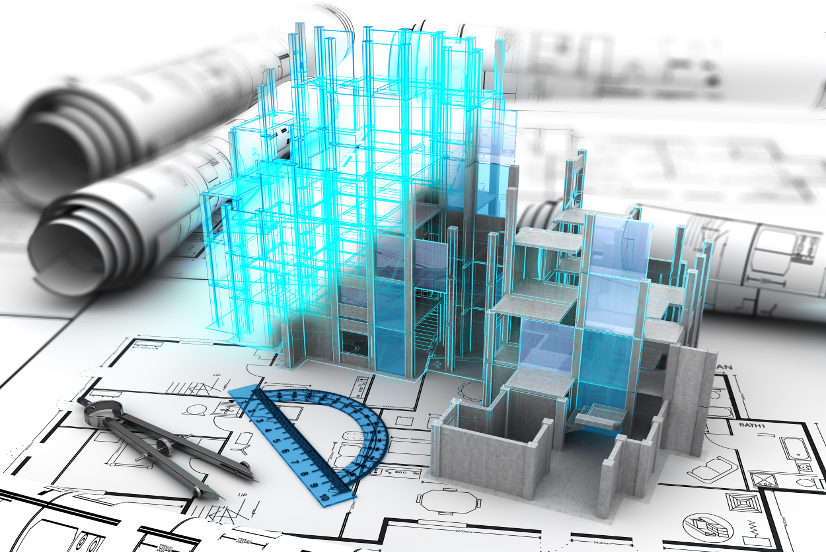
BIM tools use data to create a virtual model representing building designs and systems. This knowledge, as a 3D model, is then shared among everyone involved for a seamless collaborative experience. Since we have already cracked how to interpret building information as digital data, why not use it to optimize the process further?
At its core, BIM is already based on Artificial Intelligence and Machine Learning. It utilizes existing data sets on building materials and technology to accurately depict a project. AI/ML can improve land surveying, project documentation, management, design visualization, and implementation. Pre-calculated design conditions fed into the system help automate these processes.
Using AI/ML optimizes BIM workflows to provide efficient building solutions. This increased efficiency translates to savings in terms of time and money, with less scope for errors.
BIM Automation Services
To provide innovative digital building solutions, nCircle tech has integrated AI/ML into the BIM workflow. We use AI/ML tools to optimize the management of projects, processes, and teams.
There is a range of solutions in our arsenal, to suit all your needs.
Machine Learning Powered Scan-to-BIM
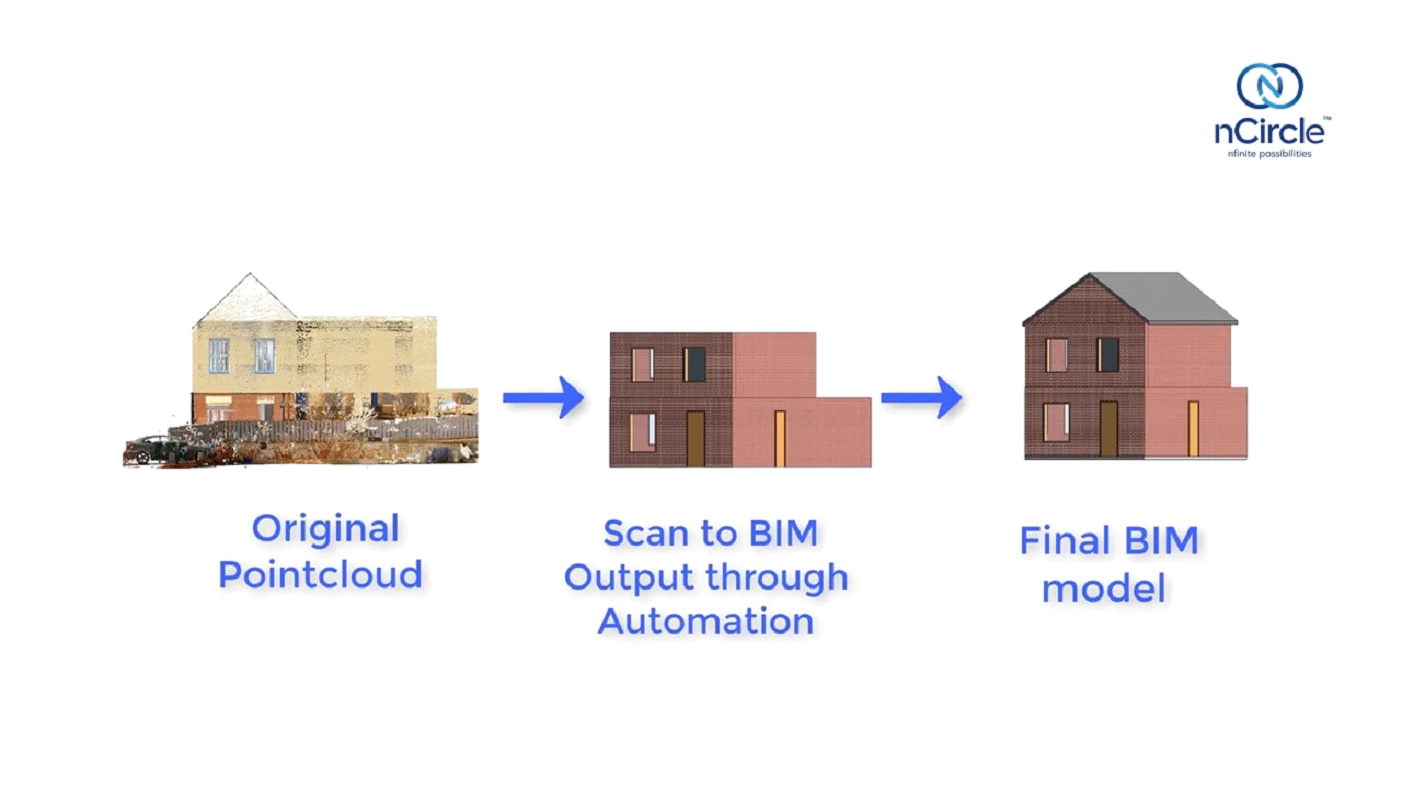
Scan to BIM software assists in 3D modeling, documentation, renovation, and reconstruction of building projects. With the world accelerating towards a 'sustainable future', documentation of existing infrastructure to propose sustainable solutions has become crucial.
Enhancing the Scan-to-BIM process using ML creates models that are precise and accurate, without demanding a lot of time. It saves time, reduces the risks, and eliminates any scope for errors.
Floor Detection using ML
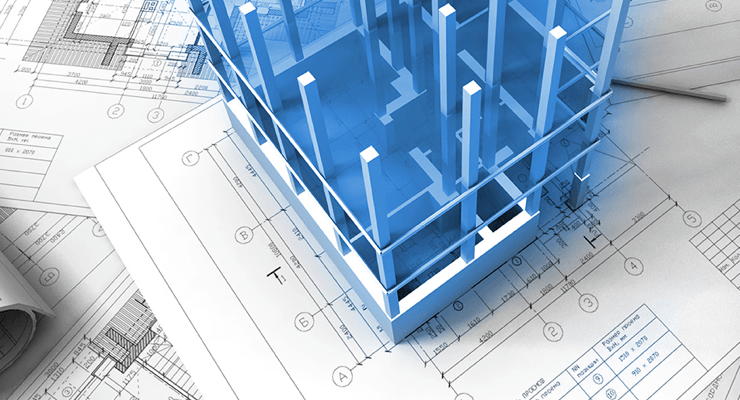
The dominant workflow of creating 3D from 2D design includes detailed checks for the detection of building floors. Using ML, this process is quickly automated to detect the building elements of the 2D input and provide an accurate 3D representation.
This advancement makes the process of Floor Detection faster and easier, no matter the complexity of the design.
Reinforcement Learning for Robot Pathfinding
RL can help robots working in construction to detect the shortest route for reaching destinations. RL is a self-learning technique that relies on feedback obtained from the environment. This technique helps in pathfinding through obstacles, radiation, constraints, etc.
ML-based Optical Character Recognition (OCR)
Usually, OCR uses Natural Language Processing (NLP), to process documents and extract relevant data. Elevating this process with AI/ML reduces shortcomings like human errors and manual copying, and sharing.
Safety checks at the Construction Site

Manual checks on the site safety levels and their compliance with safety protocols is a time-consuming process. Using ML enhances inspection and detection capabilities for proper equipment and technique on-site. Any differences with the established norms will trigger alerts to the required personnel.
BIM Voice Assistant

Using a voice assistant for BIM modeling helps optimize routine tasks and increases team proficiency. Want changes in the design or building elements? Say the word, and it’s done!
BIM Automation Tools are the way forward
BIM has already disrupted the AEC industry with its immense utility and range of features. BIM Automation tools, powered by AI/ML eliminate inefficiencies and improve the speed of project completion.
At nCircle Tech, we strive to provide innovative digital building solutions through BIM Automation tools powered by AI/ML.
FAQs
Q. What is BIM Automation?
BIM Automation uses pre-calculated design conditions to automate repetitive tasks. It saves time while providing accurate and efficient building solutions.
Q. What is a BIM tool?
A BIM tool utilises Building Information Modeling (BIM) technology. It integrates multi-disciplinary data to produce an accurate 3D representation.
Q. What is the most commonly used BIM software?
Autodesk Revit is the most commonly used software for BIM. Architects, engineers, and construction professionals worldwide use it to create and edit 3D BIM models.
Q. What can be automated in Revit?
Project estimates, floor detection, validation and verification of BIM models, Revit family generation, etc. are tasks that can be automated in Revit.
Q. What are the 5 levels of BIM?
The five levels of BIM are
⦁ BIM Level 0: All paper and no collaboration
⦁ BIM Level 1: 3D exploration with 2D communication
⦁ BIM Level 2: Individual 3D modeling
⦁ BIM Level 3: Sharing the 3D Model
⦁ BIM levels 4, 5, and 6: Time, Money, and Sustainability
Q. What are the 4 stages of BIM?
BIM implementation happens in the following 4 phases:
⦁ Assessment and Evaluation
⦁ Preparation for Transition
⦁ Execution of Plan/Design and Construction
⦁ Operations and Maintenance