
Gain a Competitive Spot with the Key Leaders in the AEC: What is Scan-to-BIM?
The speedy growth in urbanization and modern infrastructural projects with their complex demand ignite a need for breakthroughs in the AEC industry. One such platform is BIM technology and its Scan to BIM services. As per the Building Information Modeling Market Report, there is a hike of $9 billion expected in the market by the year 2025 along with a CAGR of 9-11%.
Whether we talk about the current stage or nearer future, BIM can be seen to be ruling the industry with its constant evolution in technology. Emerging technologies like VR, AI, Scan to BIM services, etc, are serving as a great aid to the designers to generate more efficient structures. What is meant by Scan to BIM and how do these services prove beneficial for the professionals? Let’s find out in detail!
The 5-Step Process to Learn Scan to BIM
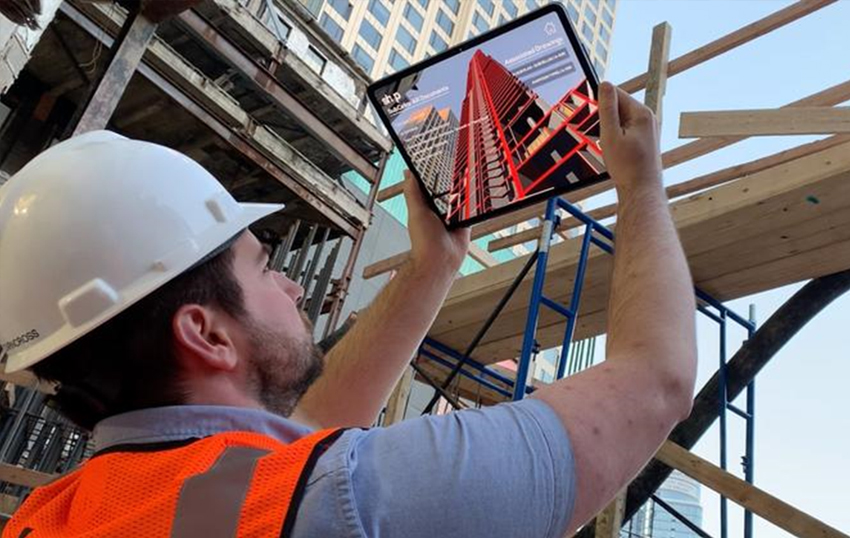
Survey Control
Scan to BIM workflow begins with the capturing of an actual structure. Laser scanners are used to precisely record the data which is further proceeded with to build a virtual 3D model. Prior to beginning with the scan to BIM procedure, the first step is to set up the points and check the correct coordinates on-site. This step is crucial in order to track the data points with the highest accuracy.
Laser scanning
This is the main step where the data is collected. 3D scanners point their laser beam and form the survey control points. Point cloud data is developed with the help of these scanners.
Processing
The point cloud data derived from the previous step is compiled and processed further. The entire set of data is analyzed and any errors are highlighted and resolved.
Modeling
Scan to BIM software comes into the picture at this level to generate the model. The verified data is used to construct a virtual as-built model.
Information
The last step is to gather and feed the necessary information that is demanded and offered by the clients.
What is BIM Used For?: 7 Major Advantages offering Higher ROI
No more Human Errors!
While manual methods leave a chance for errors, this is eliminated in the case of Scan to BIM services. The technological approach to gathering information offers accuracy and efficiency. Even after the set of data has been collected, you can cross-verify to minimize the clashes or errors.
An Ease of Collaboration
While a manual approach doesn’t allow different teams to work at the same time, one of the major advantages of the Scan to BIM is the smooth collaboration and collective working. With several teams working on a single project, the communication and exchange of ideas become easier. Different team members can work on the design at the same time and it gets reflected for the other stakeholders as well.
Quick Results, Precise Development
With superior collaboration comes the promise of efficient development. This approach leads to quicker results as there are no barriers in the process. The virtual model offers a gist of the built environments which can be modified before releasing the information on-site. The digital approach to scanning the entire structure is already a time-saver with a 50% faster approach that is further speeded up as the process ensures almost zero errors.
Clear and Crisp Communication
Whether it’s an architect’s design call or a structural engineer’s demand, every alteration or design revision will clearly be reflected. The visual representation of the same offers a clearer picture and understanding of the thought. Communication isn’t made easier within the teams but for clients as well. Virtual models with design proposals give them insights into what can be expected as the end result.
Better Construction Quality
Scan to BIM services can promise you an unparalleled quality that can’t be expected from the conventional methods. Right from the beginning of the project to its operation, BIM services keep a track of every design element and are alert to clashes. The highly detailed model enables the construction team to understand the aspects better and build the exact model on-site.
Time and Budget Control
One of the major reasons why BIM is better than CAD is the time and money-saving approach. As compared to 2D working methods, proceeding with 3D modeling will help you save time on analysis and on-site examination of each element. The computational calculations will present you with the exact required quantities of materials which saves cost as well. The clash-free approach also saves time on hefty on-site revisions.
Better ROI on your Investment
The business value and hiked ROI are what make it one of the most adopted methodologies for the design and construction industry. The process offers efficiency not only with the operation of the building but with cost management as well.
The Crisp and Clear 6 Step Scan to BIM Process
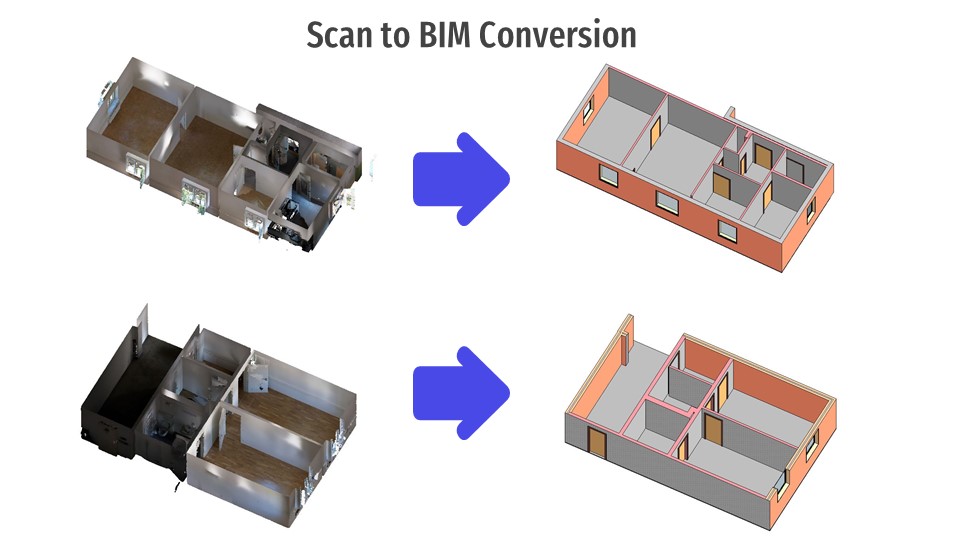
Have Beforehand Knowledge about the Goal
Even before beginning with the process of the Scan to BIM, one needs to be clear on their goals. How are you going to use the captured data or what is the motive behind the process must be clear as you begin the service. Clarity on the goal can guide in setting up the capturing points.
Set up the Scanner
3D scanners can help in collecting the data points with the highest accuracy if properly set. The scanner is placed on a tripod at a position where the laser beam reaches the apt position to collect the coordinates. At this stage, parameters like measurement points and scanning density as fixed.
Scan with a different Line of Sight
The scanner has the potential to capture whichever point aligns in its line of sight which is why the scan to BIM workflow needs you to scan from various locations and angles. You need to move it around and collect data points as per your requirements.
Transfer Data to Computer
The next step is to transfer the collected data to the system.
Use Point Cloud Service to Upload and Analyze Data
Upload and register the scanned points into a point cloud system. From here, you can perform 3D modeling to check the data. The work can be proceeded further on platforms like Scan to BIM Revit plugin.
Import Information to the Modeling Platform and Construct your Model
The last step after registering with the point cloud is to import this data to the desired software. Scan to BIM services from here will be utilized to build a constructible model.
BIM Era: A Profitable Resource for the AEC
Scan to BIM has clearly revolutionized the ways of working for AEC professionals. Not only the professionals, but the clientele set also demands upgraded services for better coordination.
It’s not the question of Scan vs BIM anymore. The future of the design industry relies on the simultaneous functioning of both that’ll aid in documenting a building at a quick pace and the entire condition can be evaluated with a single click. Whether it’s a fresh start or renovation of an old building, rest assured with the highest precision level and strong market competition.
Among the leading Scan to BIM service providers, nCircle is revolutionizing the conventional methods to come up with systems having a new-age approach. To know more, https://ncircletech.com
FAQ’s
1. What is the Scan to BIM process?
The scan to BIM process enables capturing of a live structure and building precisely detailed virtual models with real-world conditions.
2. What does BIM stand for?
Building information modeling.
3. What software does Scan to BIM use?
Software like scan to BIM Revit plugin, VRMesh, Rhino, Trimble, etc., can be used for the scan to BIM services.
4. What is BIM used for?
Right from the ideating phase to the operation of the structure, BIM is used for the creation, construction, and management.
5. What problem does BIM solve?
BIM helps in offering efficiency while construction and also aids in saving the cost of the project.
6. How does BIM improve efficiency?
The efficiency of a design is enhanced as BIM ensures minimal wastage of materials, time, and cost.
7. What is 3D Modelling in BIM?
The 3D modeling in BIM refers to the construction of a virtual model that displays the physical design aspects along with its functionality.
8. What is Scan to BIM Revit?
Revit is a platform enabling the translation of point cloud data into a 3D model.
9. How is the BIM benefit calculated?
The benefits of BIM can be evaluated based on the ROI.
10. What is the BIM process?
The BIM process begins with the design evaluation and is a smooth journey offering planning, execution, and maintenance till the lifecycle of the project.