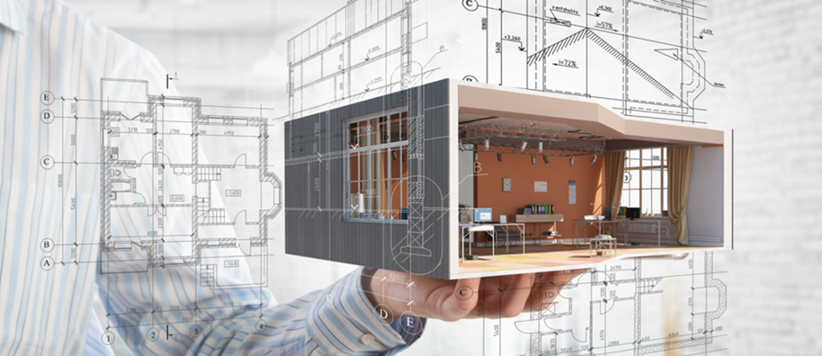
Automation in Scan to BIM for the Existing Buildings
Ever wondered how to make the already efficient even more regulated? Automation is the answer!
While Scan to BIM is already driving the AEC world, new-age development tools have contributed to its further enhancement. Currently, this technology has paved its path to existing buildings apart from the fresh developments.
Breakthroughs promise accuracy, making Scan to BIM one of the most effective tools for existing constructions. And the introduction of automation in this field is a promise to ease the documentation, renovation, and refurbishments. Through automation in scan to BIM, smart conversion solutions are being offered.
Let’s look into the opportunities and barriers associated with this advent.
How Does Scan to BIM Bring Efficient Opportunities?

1. A Comprehensive Assessment of the Building
Scan to BIM is one of the most trending and demanded services in the current AEC. While the manual task of setting up the scanners, registering point cloud data, and transforming a built structure to a digital twin is hefty, automation gets it done thoroughly and with ease.
The scanning process (if needed) is optimised to help in comprehensive assessment is carried out. Apart from focusing only on the building, a detailed analysis of the building and its surroundings is carried out. The advanced process, in this case, guarantees a high level of accuracy and detail.
2. Seamless Coordination within the Teams
One way to guarantee a project’s success is by establishing transparency amongst the distinct teams involved. As you consider the idea of outsourcing scan to BIM services, you can rest assured that the teams are well-coordinated and work in coherence.
The approach sets effective and clear communication among the different stakeholders involved.
4. Minimizing Risks
The development of a clear image of all the details of the existing building offers clarity on each and every aspect. This helps in cutting down the chances of risk.
The Barriers to the Adoption of Scan to BIM
1. The Sector is Unhurried to Embrace New Changes
The AEC sector lags behind when it comes to adopting newer methodologies. Although the world is undergoing a constant evolution, the AEC industry is still adamant about using CAD and 2D designing rather than embracing ML-powered technologies. The only way to establish a competitive edge in the profession is by adopting new-age tools for better solutions.
2. High Costs for Workflow
Another barrier to the adoption of Scan to BIM services is high costs. From investment in technology to training the staff, the overall cost does not always suit the budget. This is why outsourcing the BIM specialists promises budget-friendly and extremely reliable solutions.
3. The Scale of the Project
One of the most common myths in the industry is that BIM is made for large-scale projects. The notion serves as a barrier to the adoption of the latest building solutions for several AEC firms. However, whether large or small, the operation of any project has now become quick, efficient, and easy with the adoption of BIM and automation and with the increased adoption of the latest technologies like VLX scanners, for example.
4. Lack of Awareness and Experience
Even in this technologically driven era, there still exists a lack of awareness about BIM and automated solutions amongst AEC professionals. Owing to this barrier, there aren’t many firms practicing this approach.
Automation and An Array of Advantages
The evolution of technologies like Artificial Intelligence, Machine Learning, etc., is soon going to be a globally accepted industry standard. Unmatched efficiency and high levels of productivity are known to aid professionals in delivering their best.
The amalgamation of automation to Scan to BIM services unleashes the potential and proves to be a constructive approach. At nCircle, we keep an eye on the breakthroughs and pace ahead with technology.
Our BIM services cater to Architects, Construction Managers, MEP engineers, BIM Structural Designers, Contractors, Fabricators, Sub-contractors, Facility managers, Owners, and Project managers on all types and sizes of projects delivering customized BIM Modeling services and solutions that suit your Building Information Modeling(BIM) requirements. For more details, contact us at https://ncircletech.com/contact-us
FAQs
Q. What does the Scan to BIM service do?
The process of scanning to BIM is all about replicating existing structures digitally with unparalleled precision and details.
Q. Is automation in Scanning to BIM services fruitful?
Automation can do wonders in the Scan to BIM process, whether it's by aiding error-free BIM output with Quality checkers like Deviation nSpector or automating the 3D model output from scanned data using ML engines, or the newest in the block Scan to CAD, which is seeing high anticipation.
Q. What is the key challenge in Scan to BIM?
The primary challenge in Scan to BIM is the requirement of strong computing power and storage to process large sets of data.
Q. What is the Scan to BIM procedure?
The procedure of Scan to BIM involves setting up the scanner, taking point cloud data, and then converting it into a digital twin of the structure.
Q. What is the major advantage of Scan to BIM service?
A few of the great benefits of Scan to BIM services are digitizing your assets and an easy and quick process for the creation of 3D models without compromising on accuracy.