
What is BIM and 5 reasons why it's a force to reckon with
Since the onset of Building Information Modelling (BIM) in the 1970s, the AEC industry has been visibly faster and more efficient. And yet there are misconceptions about What do you mean by BIM, Why do we need BIM, and How to Implement BIM.
From the fundamentals of what is BIM and why it is important, how to use it, and its different levels, to how to implement BIM at your workplace in 7 easy steps. Read more to find out.
What is BIM?
BIM stands for Building Information Modelling/Management. It is a working methodology that relies on a ‘single source of truth’. BIM stores all the data regarding a building as a 3D model, making it easy to share and edit for all the disciplines involved in building construction and operations.
The scope of BIM doesn’t end with the construction of a building. It goes beyond operations and management to mapping the whole lifecycle of the building. This helps building owners and organizations make informed decisions about the building at any stage in its life.
From CAD to BIM
They say BIM evolved from CAD. Well, not exactly.
There are two ways to do things- the intuitive way and the scientific way. Carrying out the same task repeatedly to get the desired outcome is intuition. By recording these observations and using calculations to form a logical sequence, the outcome becomes predictable. This is the scientific way. It increases efficiency and reduces wastage.
When we look at it this way, CAD is intuition and BIM is science. CAD workflow is linear- the true information of a building lies with one source at a given point in time. This process leads to multiple versions of the same information while also consuming a lot of time and material.
BIM, on the other hand, is a highly collaborative tool that allows stakeholders from different disciplines to access all the building information simultaneously. This is possible by storing all information regarding a project at the same source- be it material, geospatial, financial, or logistical.
How is BIM Information Shared?
Since many different disciplines are part of a project, a common language is ideal for the exchange of information to take place seamlessly. In the context of BIM, such languages are Industry Foundation Class (IFC) and Construction Operations Building Information Exchange (COBie). It is the base standard of data exchange and communication using BIM.
The information stored in a building model is accessible through cloud-collaboration tools; a mutually accessible space known as a Common Data Environment (CDE). Sharing this information within a project can happen in two ways- Global Communication, involving all stakeholders and Direct Data Exchange involving only a group.
What are BIM Levels?
Did you know that if you are working in the AEC industry, it is highly likely that you are already using BIM? Probably at Level 0 though.
These are the other levels:
BIM Level 0: All paper and no collaboration
Using 2D CAD and digital prints makes you eligible for BIM level 0. Most of the industry is already working above this level, but not many have the required knowledge to move too far ahead.
BIM Level 1: 3D exploration with 2D communication
Design exploration in 3D at the concept stage, but the information is still communicated using 2D drawings- that’s Level 1 BIM. This stage also doesn’t involve a lot of collaboration; to each one their own.
BIM Level 2: Individual 3D modeling
This is where the collaboration begins. This is the level assigned when all team members use 3D CAD models but are not always sharing or updating the same model. All the information exchange happens through a common file format, such as IFC or COBie. This level is now compulsory for public-funded projects in countries like the UK.
BIM Level 3: Sharing the 3D Model
Level 3 is where everything comes together. At this level, everyone is sharing and using the same model through cloud collaboration. The different disciplines can all work simultaneously, getting instant updates and clash-detection notifications. This added layer of protection is sometimes called Open BIM.
BIM Levels 4, 5, and 6: Time, Money, and Sustainability
While level 3 sets the base, and all the levels after it adds a new dimension:
- Level 4 includes the dimension of time, helping to schedule the project, dividing it into phases, and sequencing the different components.
- Level 5 adds the dimension of money. It includes cost analysis, budget estimations, and tracking. This helps the stakeholders track the project budget wrt. time and material decisions.
- Level 6 tracks the energy consumption of the building. It ensures that all the participants are aware of the energy requirements of the building created by their decisions, so they make more efficient ones.
5 Reasons why BIM is important and why you need it.
- BIM improves collaboration and workflow efficiency.
The old-school architecture workflow entails the use of 2D CAD drawings, passed from office to office, occasionally coming back to the source where they get updated, only to be passed on again. BIM completely removes the need for any of it. Using CDE ensures that all information is in one place and updated in real-time. This not only holds for design but also renovation projects.
Why we need BIM is to create more iterations, waste no time in cross-checks and gather inputs from multiple sources simultaneously, already inculcated into the project.
- BIM provides a platform for 3D models and simulations.
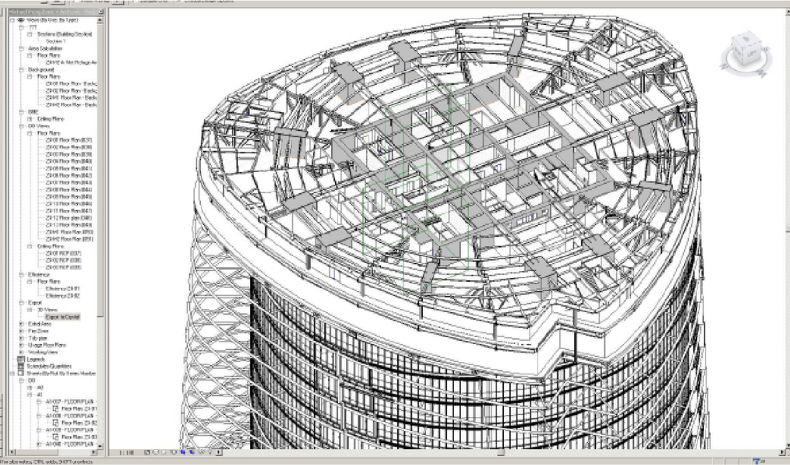
What BIM means goes beyond cloud collaboration, about the information itself. It is a storehouse of architecture and design data used to quickly prepare and visualize multiple iterations to refine the architectural and interior design aspects of a project.
- BIM enables client engagement even before construction.
The part of the BIM process that visualizes all the given information as a 3D digital model makes it easier to involve clients. A 3D model makes the design easier to understand, interpret and review for the client. Although 3D modeling is not something unique to BIM, it does come as a bonus while creating BIM models- that it stores all information, by default, in a 3D model in the digital space.
- BIM follows the building lifecycle.
Using BIM aids the building even after the construction is complete. The building manager can take hold of the BIM model that contains all the relevant information they might need throughout the lifecycle of a building. It comes in handy during any issues with the structure such as leaks or short-circuits, and even in case of renovations and repairs.
- BIM saves time, cost, and energy.
As mentioned before, BIM goes beyond 3 dimensions to include time, money, and sustainability. It provides valuable insight into saving time and resources (including capital) while the project is being constructed through provisions for scheduling, cost analysis, and lifecycle information.
How to Implement BIM: 7 Easy and Fail-proof Steps.
- Executive Support
Just like all things great, BIM also comes at a price. Switching to BIM is not an easy process, and you would want to make sure you get it right. The first step of implementing BIM is to get various stakeholders on board. You might also need entirely new roles such as a BIM Manager to facilitate a smoother transition.
You need to make a strong case to encourage everyone to invest in BIM. One of the best ways to do that is to align BIM Implementation with the business goals of your organization. The costs incurred in transitioning to BIM are negligible when you compare them to the long-term benefits of using BIM.
- Develop your Plans
BIM implementation is not a one-go act. It requires patience and consistency. You can prepare a BIM Implementation Plan, defining everyone’s roles and requirements. Keep in mind that BIM is relatively new and everything might not go smoothly the first go. That’s okay. Learn, adapt, and improve.
- Choose your Software
There is a variety of BIM software out there- Revit, ArchiCAD, Quadri, etc. Each differs in its services and hence it becomes crucial to pick out the right one to suit your needs. The first step is to study their features and advantages, but the real picture will only get clear once you try them out in person.
- Set Realistic Goals
Planning is always better with a clear and defined outcome. BIM Implementation Strategies will be more meaningful if you define your ultimate goal(s). Just make sure that these goals are specific, measurable, and most importantly, achievable.
- Choose your Team
Another crucial step in the list of how to implement BIM is making your team. Gather your lot and assign them roles, and make sure they stick around them. This makes everyone’s jobs easier as they know what is expected of them. A good learning environment is created by facilitating open learning- where everyone is learning from everyone else.
- Train your Team
Before starting with anything new, it is important to get basic training. Since BIM Implementation involves new software and processes, it becomes crucial to get trained in the basics of these aspects so the whole transition is smooth and seamless.
- Monitor, Evaluate, and Adjust
Once the basics are set and things start working out between you and BIM, tracking progress and improving your process. This means monitoring, evaluating, adjusting, and repeating. Once you get the hang of the software you will learn ways to improve your workflow and output, and also understand how you can work at different stages to optimize the whole process in a better and more efficient manner.
The Future of BIM

Despite the misconceptions about what BIM means and why we need BIM, it is clear that BIM is here to stay. With its efficiency and cloud-based collaboration, BIM is gradually becoming a standard requirement for the AEC industry. Soon enough, 4D, 5D, and 6D BIM will become an integral part of the process, reducing material waste and errors in cost estimates and building schedules.
Furthermore, new technology is aiming at using BIM in conjunction with AI, ML, and AR/VR tools. This will help contractors and manufacturers in clash detection and make building design more accessible for all stakeholders, especially the clients and users.
FAQs
Q. How do you successfully implement BIM?
Successful implementation of BIM can be carried out in 7 steps:
- Executive support
- Develop your plans.
- Choose your software.
- Set realistic goals.
- Choose your team.
- Train your team
- Monitor, evaluate, and adjust.
Q. What are the 5 levels of BIM?
The five levels of BIM are:
- BIM Level 0: All paper and no collaboration
- BIM Level 1: 3D exploration with 2D communication
- BIM Level 2: Individual 3D modeling
- BIM Level 3: Sharing the 3D Model
- BIM levels 4, 5, and 6: Time, Money, and Sustainability
Q. What is BIM and why is it important?
BIM is a working methodology that relies on a ‘single source of truth’. It stores all the data regarding a building in the form of a 3D model, easy to share and edit for anyone. It is important as it improves collaboration, and efficiency provides a platform for modeling and simulations, increases client engagement, follows the building lifecycle, and saves time, cost, and energy.
Q. What are BIM models used for?
BIM models store and share all the information related to a building. It uses design and architectural data gathered over the years through various standards and experiments to generate an accurate digital simulation of a project. This 3D model is then shared among different stakeholders using platforms like CDE or formats like IFC.
Q. Who Uses BIM in construction?
Any disciplines involved in the process of building construction can use BIM- client, architect, structural engineer, MEP consultant, etc. It is useful and applicable while designing, planning, construction, and even beyond- for the operations and maintenance throughout the lifecycle of the building.
Q. What is BIM’s easy explanation?
BIM stands for Building Information Modelling or even Building Information Management. It is a working methodology that relies on a ‘single source of truth’. BIM stores all the data regarding a building in the form of a 3D model shared and edited by all the different disciplines involved in the building construction and operations process.