Top 10 Advantages of using BIM in Construction | Why use BIM?
The popularity of BIM has grown so much that many countries like the US already have more than 50% of their industry relying on it, while in many others like the UK it is already a mandate for all large-scale public projects.
And yet, many of us are still pondering over the question of why we use BIM or how does BIM benefit our practice.
BIM captures all data of a building project as a 3D model, allowing sharing and collaboration among all its stakeholders. For its efficiency and utility, it has been the talk of the town for quite a while now. Read more on the top 10 ways the AEC industry is benefitting from BIM’s amazing features.
But before we dive into it, let us understand why is BIM so significant for the industry.
Life before BIM….

Before the 90s, architects, and engineers of the industry were losing their minds over the endless changes and project delays. Each change was to be manually reflected.
Then arrivedCAD with its features of ‘block editing’ and its accuracy in drafting and measurement, at least they would worry a little less.
But still, this wasn’t enough.
They needed something better that binds all the processes together, one change that reflects in all the drawings from the design team to the MEP.
Something that facilitates better collaboration with the others involved in the project.
Enters BIM in the 90s- the solution to all their problems. It wasn’t merely a tool, but a new working methodology in itself.
The change was significant and hence received much scepticism. Why should we use BIM? Is it worth all the effort?
Yes, it is. Here is why.
10 Benefits of using BIM in Construction
- Visualize your design before construction

3-D modelling is a fundamental aspect of BIM. This allows you to visualize the entirety of a project before its construction begins. When trying to communicate the same to either the client or other stakeholders, you can choose between the traditional 2D representation or the 3D model.
Having a better overview of a project from the initial stage allows for greater insight into its different aspects, minimizing any scope for major changes later.
- Detect and resolve clashes
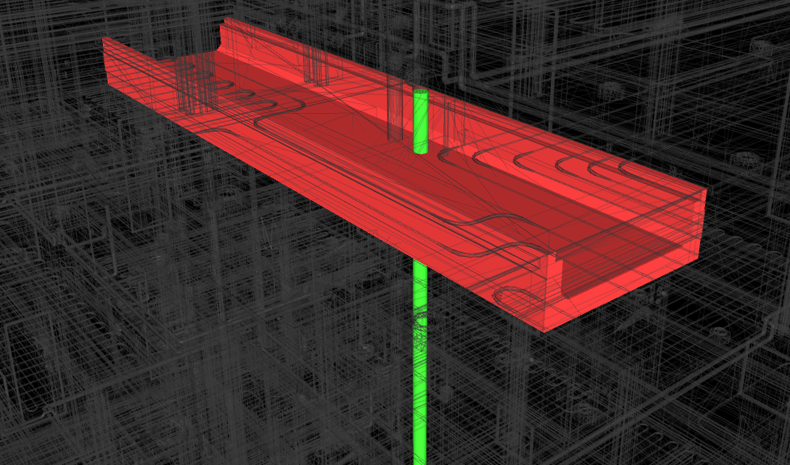
With its multi-disciplinary collaboration features, BIM allows clash detection and resolution. With the MEP, HVAC, and plumbing details integrated into the project, BIM detects if anything is clashing with the structural supports, or with each other.
It even initiates clash resolution, with every change being instantaneously communicated to all stakeholders involved in the project.
BIM facilitates the pre-planning of minute details, giving you a pre-construction overview.
- Schedule it better with BIM
Saving time on projects happens effortlessly with BIM, but that’s not all.
It integrates the dimension of time with the building model, creating 4D BIM. This means that design can work with on-site documentation.
It helps with efficient planning and scheduling of the various phases of a project, flexible enough to adapt.
- Estimate accurate project costs using the BIM Model
Everything in the BIM 3D model is accurate and in detail while storing all its physical attributes. It becomes fairly convenient to calculate material quantities and create project estimates with BIM due to its comprehensive framework.
The industry has already realized that calculating project estimates are a job better done prior. BIM has introduced model-based cost estimation by integrating it into the model as the 5th Dimension. Automating the task of calculating quantities and costs allows the estimators/designers to focus on other important aspects of construction, such as assemblies and risks.
- Better collaboration and communication
Better communication is the key to constructing a great building.
BIM features cloud collaboration and integrates specific features for all the different disciplines involved. All the information of a project now lies in a single source that is instantly accessible by all.
This allows for crisp and clear communication between stakeholders. It reduces project risks and saves both, time and financial investments.
- Pre-Fabricate building elements using BIM
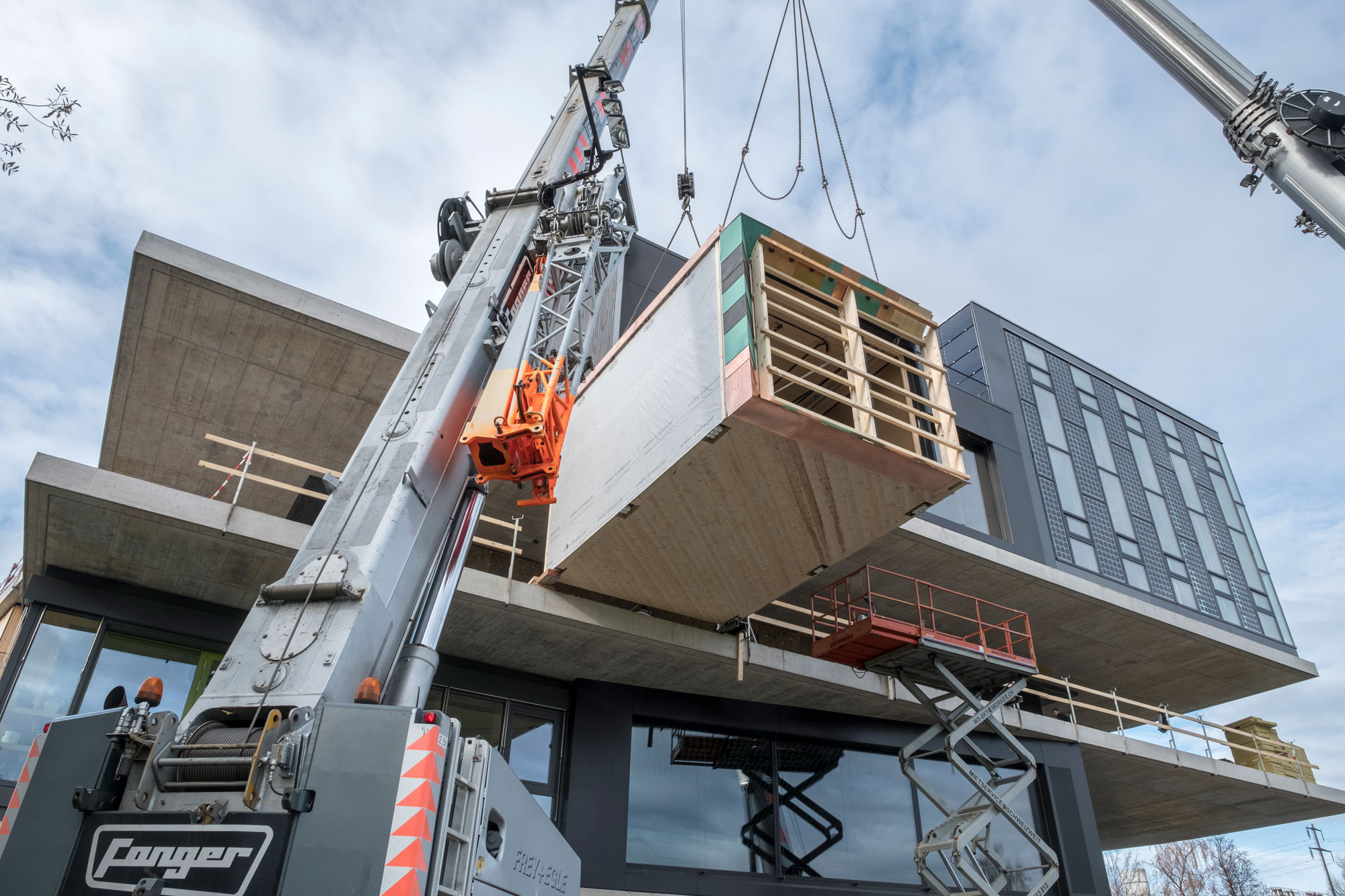
Prefabrication of building elements is cheaper, more efficient, and leads to less waste when compared to in-situ fabrication of building elements. Since the design and planning get completed much faster using BIM, there is scope for pre-fabrication.
- Low risks and lower costs
According to McKinsey, almost 75% of the companies that adopted BIM have reported positive ROI.
Think about it— a better overview of the project allows bandwidth for exploration while reducing waste and on-site labour costs. All information available through one, updated model means fewer variations, lower risks, and fewer opportunities for any money-intensive claims.
- BIM improves on-site safety
BIM technology can plan for a building beyond its design stage. It considers on-site logistics and can plan construction procedures to avoid any safety risks at any point during construction.
BIM technology helps in detecting on-site hazards before they turn into issues. It improves construction safety and mitigates risks to the physical health and well-being of those working on-site.
- Nobody does it better than BIM | Best quality construction
As the whole construction procedure is well-coordinated and streamlined, it automatically translates to better-built quality. Saving time on design and construction planning allows the stakeholder to also look for material alternatives and efficient design strategies.
Using BIM in construction provides an upper hand on technical decisions and design execution. Construction optimization and structural capabilities can be further explored and perfected using the features of BIM. The quality of spaces can also be refined using instant visualization capabilities.
- Manage your facilities better using BIM
BIM is a construction technology in its truest sense. Its utility does not end with construction but goes beyond to map the complete life-cycle of a building. After construction, the BIM model goes to the building owner and managers. Whenever there is repair or renovation work, the model can assist with the job.
Since the BIM model also integrates all building services, managing these facilities and identifying leaks or points or probable points of a defect in the building becomes convenient.
Despite this, why isn’t everyone ‘BIMing’?
The inception of BIM in the construction industry got a sceptical response.
BIM is not merely software but it requires an alteration in the methodology and workflow of an organization. That said, software (like Autodesk Revit, BIM 360, and Navisworks) is an integral part of BIM and demands specific infrastructural elements and skilled employees.
But, it is getting better…..
BIM is growing at an exponential rate, now more than ever with the integration of AI/ML.
It's not long before the world understands why BIM should be used and it becomes the ‘universal language of the AEC industry.
FAQs: Benefits of BIM in the Construction Industry
Q. What are the 10 reasons or advantages of using the BIM process?
- Visualize your design before construction
- Detect and resolve clashes in the project
- Schedule it better with BIM
- Estimate accurate project costs using the BIM Model
- Use BIM to collaborate and communicate better
- Pre-Fabricate building elements using BIM
- BIM means lower risks and lower costs
- BIM improves on-site safety
Nobody does it better than BIM | Best quality construction
Manage your facilities better using BIM
Q. What is BIM and why is it important?
BIM is a working methodology relying on a ‘single source of truth. It stores design and architectural data in the form of a 3D model which is then shared among all stakeholders of a project.
Q. How does BIM improve efficiency?
BIM reduces the time consumption in processes on inter-disciplinary collaboration, clash-detection and resolution, and on-site risks by automating these tasks. This saves time, and money and improves safety during construction, reducing project delays and hence cost overruns, thus making the whole process more efficient.
Q. Why is BIM good for sustainability?
BIM creates a scope for the time utilized in ideation and research for alternate material alternatives and construction techniques used during construction. It also integrates the energy consumption of a building as a 6th Dimension (6D BIM) to analyze alternatives of energy consumption during the design stage itself.
- What are the five fundamentals of BIM?
- Pre-construction Visualization
- Material estimates and cost calculation
- Communication and Collaboration
- Improved on-site coordination
- Digital simulation and refinement