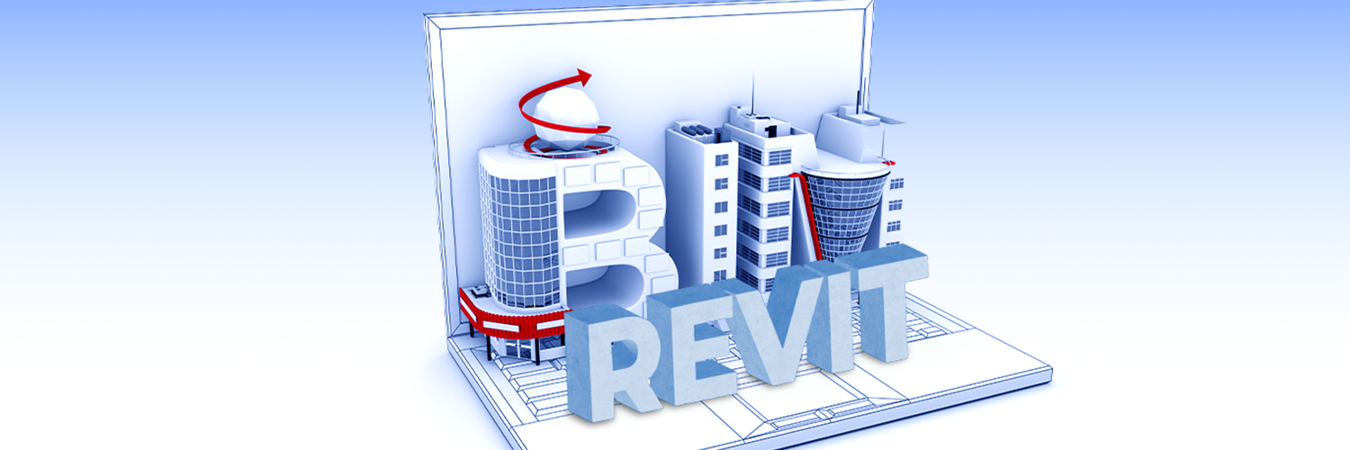
How is BIM different from Revit? | The Difference between Revit and BIM
The terms ‘Revit’ and ‘BIM’ are often used interchangeably in the AEC Industry nowadays. This leads to the impression that they are the same thing, which is not true.
What is Revit, and how is it different from BIM? Do they have any connection at all? Why is Revit confused with BIM?
This one is going to be just about that. But before diving headfirst into it, let’s revise some things about BIM.
What is BIM?
Building Information Modeling (BIM) is a collaborative workflow for AEC professionals. It is a process that relies on creating a 3D model of the project and linking all the information to it. This includes material data, cost estimations, project schedules, building lifecycle, etc.
BIM uses cloud collaboration, allowing all project stakeholders to access and improvise building information simultaneously. Using BIM, AEC professionals are able to design, build and operate a project faster and more efficiently.
Why Revit is not the same as BIM | BIM vs Revit
Autodesk Revit is a software tool developed for BIM. Revit modeling is an integral part of the BIM methodology, shared over CDE for seamless collaboration.
While BIM is the overall working methodology, Revit is the tool used to achieve it. BIM is the process while Revit is a means to that end. Though they have significant overlaps, the fact remains that BIM incorporates much more than just Revit.
BIM Beyond Revit
With the wide-ranging applications of BIM, it is not possible (yet) for a single software to accommodate all of it. Moreover, the BIM process in itself is quite elaborate. You have to work under a BIM execution plan, in a CDE, follow a LOD strategy, work with SMPs (Standards, Methods, and Procedures), and manage clash reports and construction sequencing.
BIM goes beyond what Revit has to offer. Revit works in collaboration with allied tools and Revit plugins such as BIM 360, Navisworks, and ReCap Pro, to utilise BIM to its full potential.
That said, Revit is highly popular in an increasingly digitising AEC industry. With its immense applications and range of allied software, Revit is the primary choice of the construction industry for BIM.
How Revit Supports BIM
Revit creates data-based 3D models for construction projects. It accommodates 3D models of architectural, structural, and MEP design. It also allows hosting the 3D model in a CDE that streamlines the process of interdisciplinary collaboration.
Here are some features of Revit that make it the most popular BIM tool:
- Parametric Objects: Revit objects are defined and manipulated through a set of parameters.
- 3D Visualisation: Better understanding and communication in the team and with the client.
- Construction documentation: all drawings are linked with the 3D model, updated, and shared easily.
- Quick Changes: With everything directly linked to the 3D model, any change is instantly reflected in all related components and the overall building model.
- Materials and estimates: Project schedule and estimate can be directly linked 3D Model.
- Interoperability: Revit supports a wide range of file formats for both the import and export of data.
Team Revit for the Win!
The fact that ‘BIM’ and ‘Revit’ are interchangeable is an indicator of the wide user base of Revit as a BIM application. Due to the efficiency of the software and a wide range of allied tools, Revit is one of the most compatible BIM tools used in the industry.
There are other BIM tools as well, some of them more intuitive than Revit. But it's hard to match Revit’s design autonomy, parametric elements and a great range of ‘families’ and materials. A wide user base also translates to an active user forum for suggestions for improvements or clarification of doubts.
BIM is well on its way to revolutionising the AEC industry to achieve its true potential by leveraging the latest technology. Revit, being the most widely used BIM software, is leading the revolution!
FAQs: BIM vs Revit
Q: Is BIM simliar to Revit?
BIM is a working methodology while Revit is a tool, a software based on BIM. Revit is not BIM itself but it helps AEC professionals integrate BIM into their workflows.
Q: Can Revit do BIM?
Revit is a software developed specifically for the AEC industry. It is based on Building Information Modeling (BIM).
Q: Is Revit the best BIM software?
Revit is an extremely popular BIM software among architects, designers, engineers, and construction professionals.
Q: Is Revit a CAD or BIM?
CAD is applicable to varied fields such as jewellery design, product design, and construction, while BIM is specifically developed for the construction industry. Revit is software for BIM.
Q: Is BIM replacing CAD?
BIM can be understood as a way to develop collaborative workflows in an already CAD-friendly process.