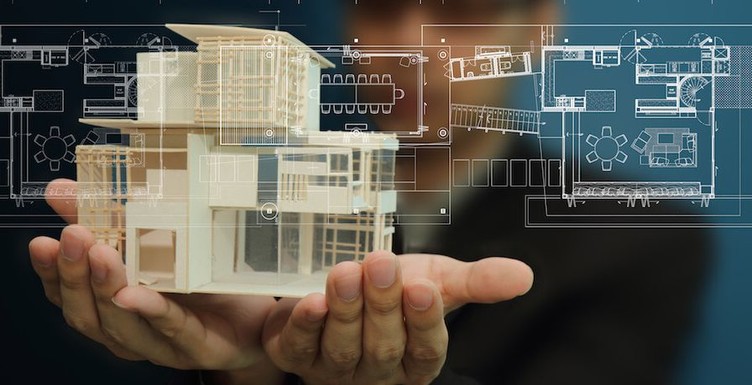
How Deep Learning helps in creating 3D models from 2D plans using ML
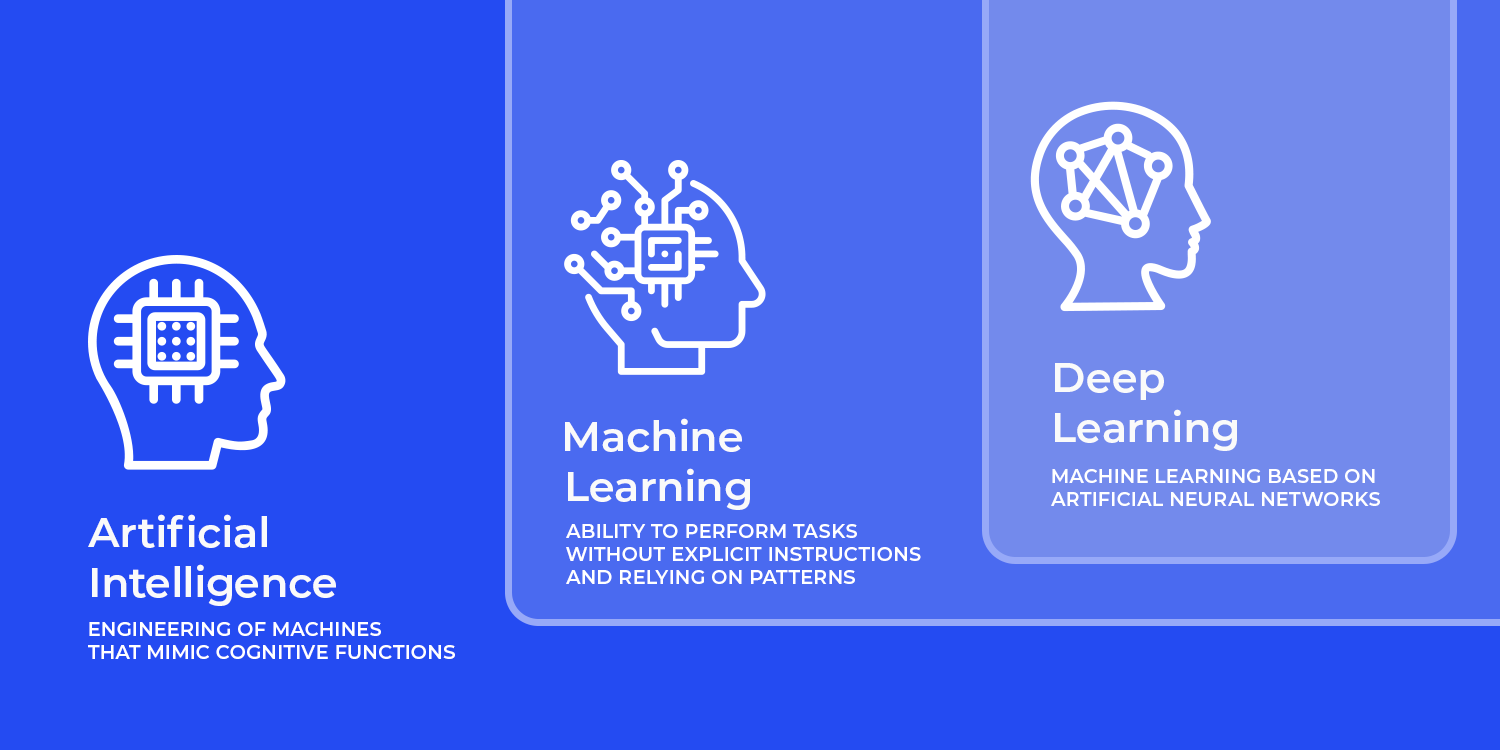
Among the looming deadlines and endless redos, there is no room for errors in the AEC industry. The urgency to streamline workflows can be met with automation, using the latest technology such as Deep Learning, a part of machine learning methods based on Artificial Neural Networks.
Our software-based clients approached us with a similar problem– the need to produce accurate 3D models from 2D drawings, in a few minutes. Being the pioneers in blending automation within the AEC industry, this challenge was taken head-on by team nCircle. We began to wonder– What if a single solution could automatically 3D models from 2D plans and elevations?
The team at nCircle Tech leveraged +on Deep Learning to curate a smooth journey from 2D to 3D. Using ML we developed intelligent software that aided our clients and their customers to obtain 3D models from 2D drawings within a few minutes. This system gave the users a ‘single-click’ workflow; be it adding dimensions or producing a 3D model.
Sounds too good to be true? Read more to find out.
Balancing Easy and Accurate: Professional Software that is Easy to Use
The brief was to design software to reduce the use of CAD while achieving a great degree of customisation. It was to be simple yet precise, with in-built construction symbols and commands based on a drag-and-drop workflow.
The simplicity of the software would not be at the expense of its precision. It was to give professional results, easing out drawing stages with a cohesive creation process. The agenda was to produce a 3D model from the given 2D inputs while focusing on delivering a holistic experience.
In essence, however, the focus was on optimising the number of drawings produced by a single draftsman, scaling their outcomes, and driving ROI.
The Process and Workmanship
The unique niche of the clientele and their requirements made the task interesting. Understanding the use case is crucial– you obtain 2D plans as raster images and convert them into a 3D model, automatically.
The clients’ proprietary software allowed them to model in 3D with ease, but as a manual process. It has all the required entitles like walls, doors, and windows, customisable according to their height, shape, and material. We interpret 2D plans as point clouds using ML and feed them to the software, leaving the rest to it. Thus, the manual process of creating 3D models is automated.
Deep Learning made the development of the pipeline for the interpretation of the 2D plan easier. A 2D plan provided the input we needed to decipher the characteristics of an internal wall, external wall, doors, and windows.
The only manual input from our side is the general information regarding the wall and floor heights, and the scaling factor. Once that is provided the software automatically creates the 3D model from the 2D image.
Top 5 Reasons why the Client chose us:
- Attention to detail in all our projects and services.
- Decade-long journey of providing the best services in BIM Automation.
- Use of Deep Learning and ML, allowing accurate results with only a handful of sample data.
- Requirement of high-quality code without hosting any servers.
- Need for an efficient and safe system in place.
Top 5 Challenges we Encountered….
- Converting 2D Raster Image into 3D Vector Data
Converting the 2D raster image of a plan into 3D Data is a daunting task. A set of sophisticated algorithms was required to decipher the elements of the plan as 3D elements while providing accurate results.
- Lack of real-time references
At the time of development of this software, there were no competitors in the market to provide similar services. The lack of references meant there were no case studies to build upon, and everything was to be thought of afresh, from scratch.
- Navigating through manual errors
A major challenge during the development of the software was to navigate through the errors in the initial outputs manually and make improvements.
- Accuracy
In all cases of machine learning, the accuracy of the output is always a concern. Careful considerations are crucial to take smart decisions during the development phase, especially if the solution is to be provided according to the set accuracy expectations.
- Creating a holistic solution
Converting 2D raster images into vector format is simple if compared to the task of creating 3D models out of it. Developing a program that not only converts 2D data into 3D but also differentiates the wall forms doors and windows to create accurate layouts and elevations posed a challenge.
Our Response
The stellar team of experts at nCircle perceived all challenges as opportunities. Lack of competition in the market was a chance to create a groundbreaking program and become pioneers in the field of automation.
Venturing into this untapped space we managed to innovate and custom-deliver a solution. Despite the complexity and magnitude of the task, the team at nCircle was able to produce quality results within a year’s time. From data gathering to execution, nCircle Tech provided an end-to-end solution.
The Results
With a decade-long experience, we at nCircle have worked as partners with our clients.
Leveraging the latest technology of ML, we at nCircle Tech provided a holistic solution for creating accurate 3D models from 2D data, automatically. The draftsmen now only had to make minor adjustments in the model, instead of spending hours creating it from scratch. Exercising the power of Deep Learning, we provided a novel solution for automating the repetitive task of digital model-making from a 2D layout.
Read more on how we used Big Data to enable a US-based Real Estate company to make informed decisions.